
Research desk
Blog
Market structure, product notes, and trading intelligence from the Stacked Markets desk.
Market tape
Lead story
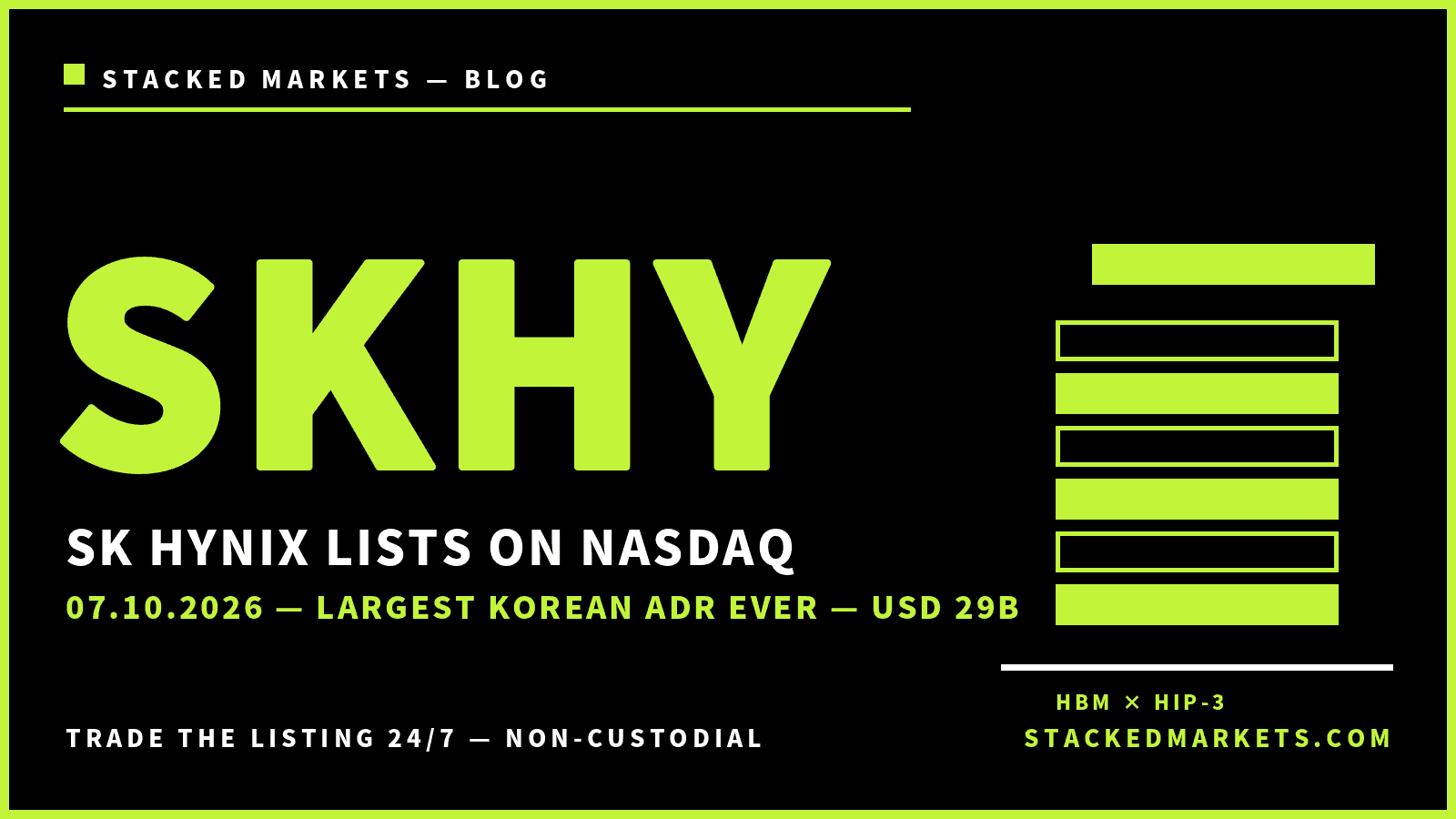
SK Hynix US listing: what traders need to know — and how to trade SKHY on Hyperliquid before and after July 10
Jul 7, 2026By Stacked Markets
SK Hynix lists on Nasdaq on July 10 as SKHY — the largest Korean ADR ever at USD 29B. Here's how to trade pre-listing price discovery non-custodially via Stacked Markets, 24/7, before New York opens.
Read article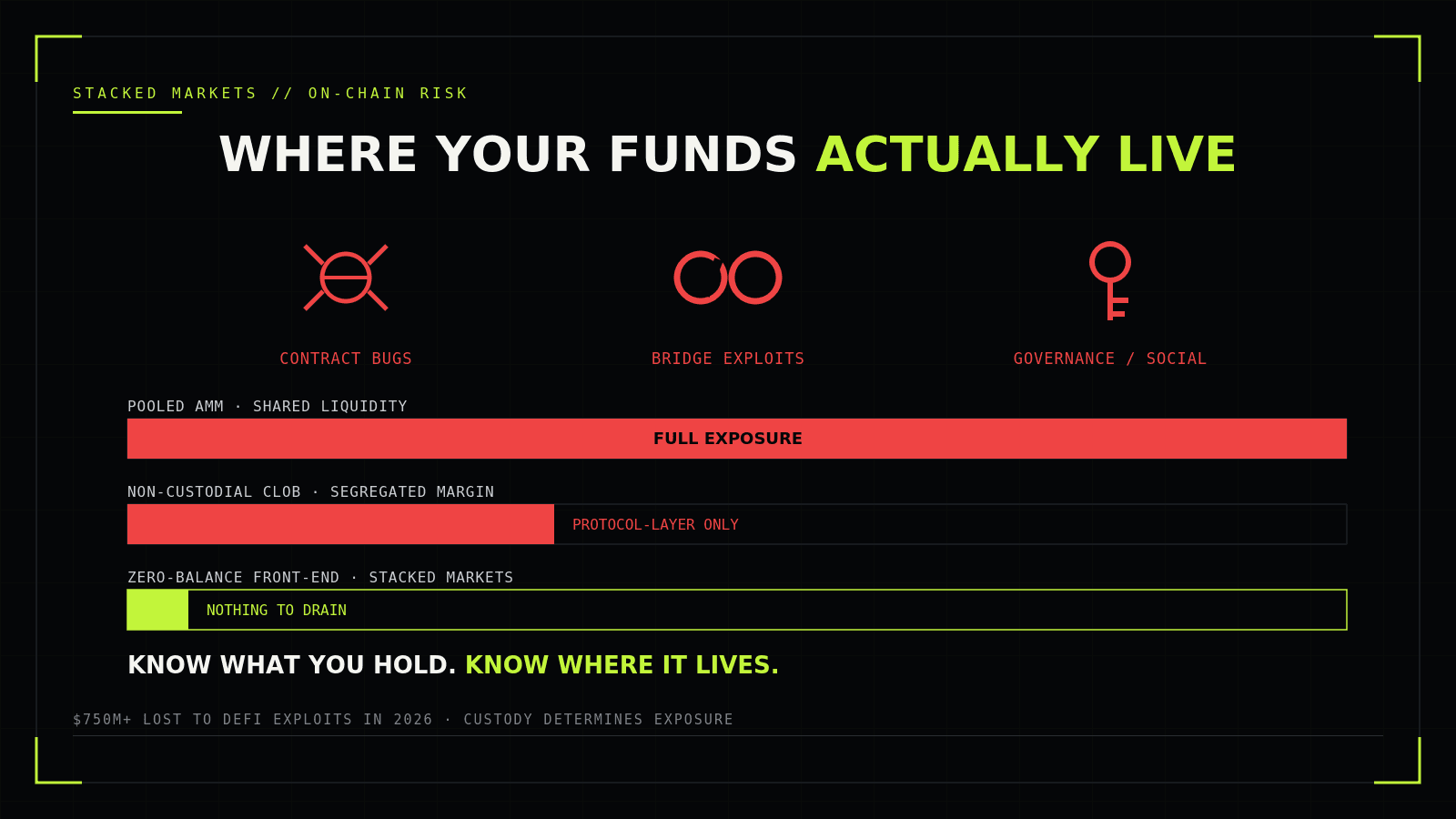
Top stories
What happens to your funds if a DEX gets hacked? On-chain risk explained
Jul 4, 2026By Stacked Markets
USD 1B+ left DeFi in the first four months of 2026. Whether your funds are at risk depends on where they live. A breakdown of every attack scenario and what it actually means for your capital.
Top stories
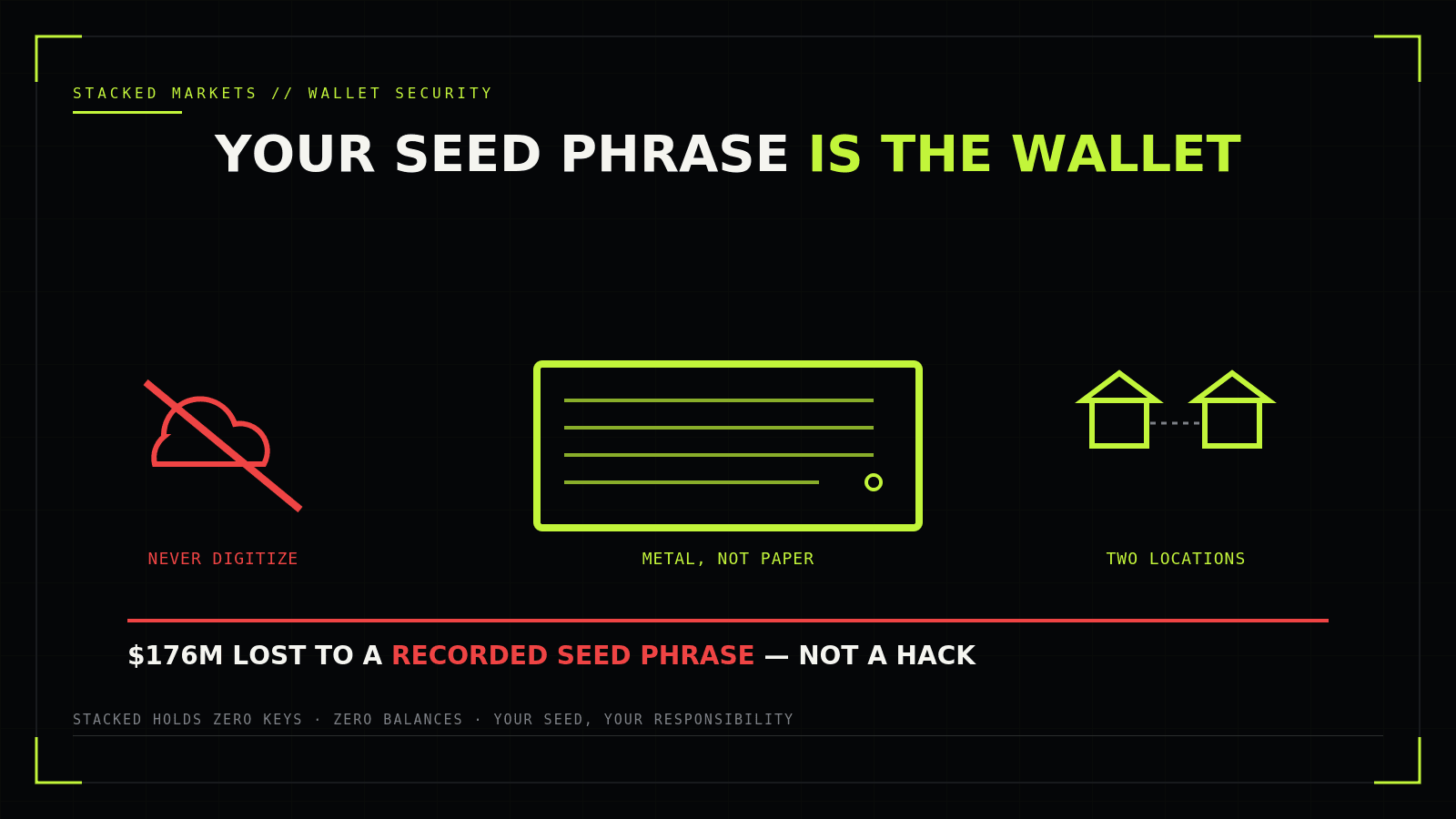
Seed phrase security: the non-custodial trader's most important habit
Jul 4, 2026By Stacked Markets
Non-custodial architecture protects you from exchange failure. It provides zero protection against seed phrase compromise. Here's the habit system that actually keeps your wallet safe.
Top stories
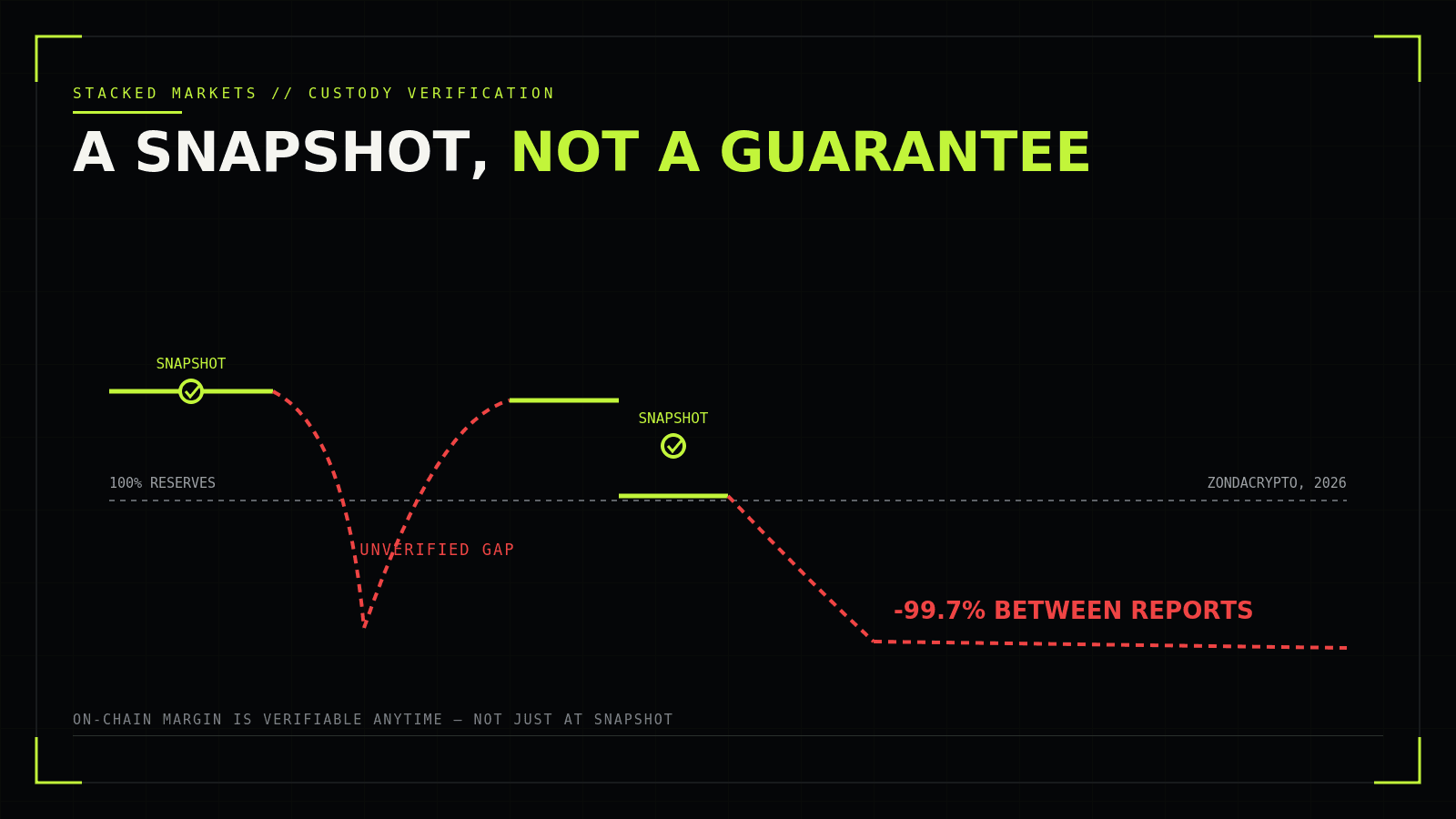
Proof of reserves vs self-custody: what 'not your keys' really means for traders
Jul 4, 2026By Stacked Markets
Proof of reserves snapshots looked fine at FTX. Bybit lost USD 1.5B in a single attack PoR couldn't detect. Here's what the math actually checks - and what it doesn't.
Latest stories
Briefing
- 01
SK Hynix US listing: what traders need to know — and how to trade SKHY on Hyperliquid before and after July 10
Jul 7, 2026By Stacked Markets
SK Hynix lists on Nasdaq on July 10 as SKHY — the largest Korean ADR ever at USD 29B. Here's how to trade pre-listing price discovery non-custodially via Stacked Markets, 24/7, before New York opens.
- 02
What happens to your funds if a DEX gets hacked? On-chain risk explained
Jul 4, 2026By Stacked Markets
USD 1B+ left DeFi in the first four months of 2026. Whether your funds are at risk depends on where they live. A breakdown of every attack scenario and what it actually means for your capital.
- 03
Seed phrase security: the non-custodial trader's most important habit
Jul 4, 2026By Stacked Markets
Non-custodial architecture protects you from exchange failure. It provides zero protection against seed phrase compromise. Here's the habit system that actually keeps your wallet safe.
- 04
Proof of reserves vs self-custody: what 'not your keys' really means for traders
Jul 4, 2026By Stacked Markets
Proof of reserves snapshots looked fine at FTX. Bybit lost USD 1.5B in a single attack PoR couldn't detect. Here's what the math actually checks - and what it doesn't.
- 05
How smart contracts work in financial markets: Ethereum, Arbitrum, and on-chain trading explained
Jul 4, 2026By Stacked Markets
Smart contracts replace intermediaries with self-executing code. Here's how Ethereum, Arbitrum, and on-chain protocols like Hyperliquid use them to run financial markets - and what that means for your trades.
- 06
Who Is Stacked Markets For? A Beginner vs. Advanced Trader Breakdown
Jul 4, 2026
Stacked Markets is a non-custodial perpetual futures terminal built on Hyperliquid. But who is it actually for? This breakdown covers what the platform demands from beginner traders, where it delivers for advanced users, and how to know which category you fall into before you connect a wallet.
- 07
Stacked Markets vs Bybit: what custody risk actually costs you
Jul 4, 2026By Stacked Markets
Bybit had proof of reserves, cold wallets, and USD 1.5B stolen in a single attack. Here's exactly what custodial risk costs active traders - and what genuinely removes it.
- 08
How to Avoid Crypto Phishing Scams Targeting DEX Traders
Jul 4, 2026By Stacked Markets
Phishing and private key compromise now account for more DeFi losses than smart contract bugs. Here's every active attack vector targeting DEX traders in 2026 - and the nine rules that stop them.
- 09
Hardware wallets for active traders: what they actually protect (and what they don't)
Jul 4, 2026By Stacked Markets
Hardware wallets aren't just for HODLers. Active perp traders need one too - just not for signing every order. Here's exactly where they belong in an on-chain trading stack.
- 10
Pre-IPO perpetual futures on Hyperliquid: how they work, how prices are derived, and what the risks actually are
Jul 4, 2026By Stacked Markets
SpaceX peaked at USD 220 on Hyperliquid before the IPO priced at USD 135. Here's how pre-IPO perps are priced, why the oracle crashed 45% on a stock split, and what the AI IPO pipeline means next.
- 11
How Hyperliquid's Order Book Works: CLOB Mechanics for Perp Traders
Jul 4, 2026By Stacked Markets
Hyperliquid runs a fully on-chain CLOB with price-time priority matching, IOC limits instead of market orders, and verifiable settlement. Here's what that means for your fills, latency, and liquidation risk.
- 12
Smart contract risk in DeFi trading: how to evaluate it before you deposit
May 31, 2026By Stacked Markets
Over USD 1B lost in DeFi in the first four months of 2026. Here's the eight-point framework active traders should run before depositing - and what no checklist can fully protect you from.